10 Tips for Choosing the Best Wok Induction Hob
Choosing the right Wok Induction Hob can change how confidently you cook every day. A suitable model should heat quickly, respond accurately, and support the rounded base of a wok. However, specifications alone do not tell the whole story. Real performance depends on pan size, induction compatibility, kitchen ventilation, and your cooking habits.
This guide shares ten practical tips based on common kitchen testing principles and everyday cooking needs. We will examine power ratings, temperature control, cooking-zone dimensions, safety features, cleaning design, and electrical requirements. A powerful hob may sear beef quickly, but poor control can burn garlic within seconds. Small details matter.
Look closely.
You should also consider whether the surface holds a stable wok during vigorous tossing. Some compact hobs have strong heating but limited space around the cookware. Others include touch controls that become difficult to use with wet fingers. These weaknesses are easy to overlook in a showroom.
Reliable guidance requires more than repeating manufacturer claims. Check independent reviews, warranty terms, installation instructions, and user feedback from comparable kitchens. It is also wise to admit that no single Wok Induction Hob suits everyone. A professional cook may prioritise rapid recovery, while a home user may value quiet operation and easy cleaning.
The best choice balances performance, safety, durability, and realistic kitchen conditions. With these ten tips, you can compare models more carefully and avoid paying for features you may rarely use.
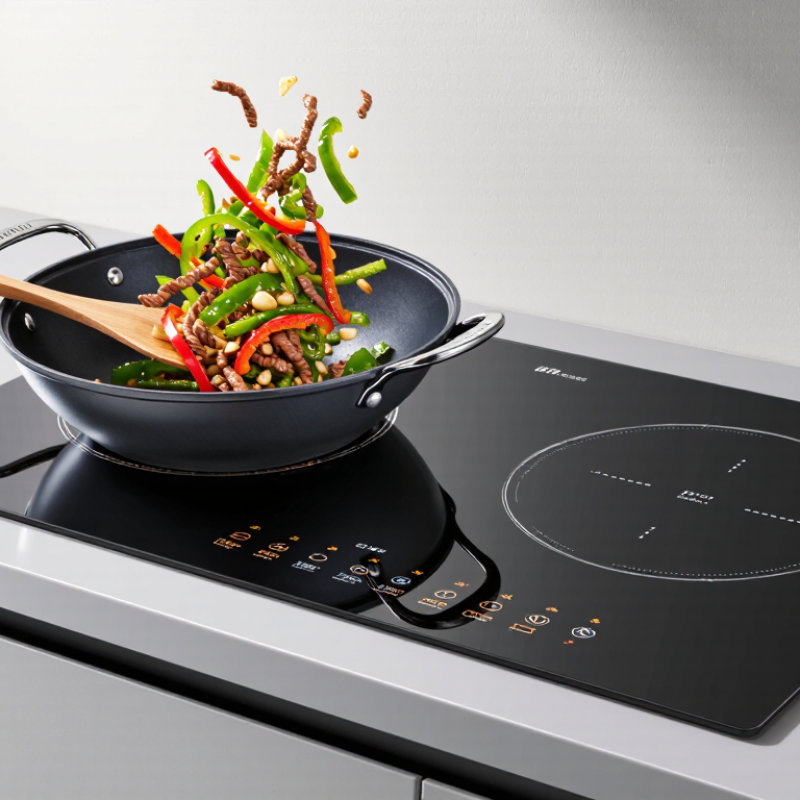
Define Wok Induction Hob Types and Cooking Requirements
10 Tips for Choosing the Best Wok Induction Hob
Define the hob type before comparing power ratings. A dedicated wok induction hob has a concave cooking zone that supports a round-bottom wok securely. It heats the center strongly and suits stir-frying, tossing, and quick sauce reduction. A flat induction hob works with a flat-bottom wok or a stable adapter ring. It offers more flexibility, but heat may spread less evenly. A portable single-zone unit fits small kitchens and outdoor cooking areas, although its controls and cooling system can feel limited.
Tip 1: Match the hob to your wok base.
Measure the contact area, not only the rim diameter.
Tip 2: Check real power and temperature control.
High wattage helps boiling, but gentle settings protect garlic, oil, and delicate vegetables. Too much power is wasteful.
Tip 3: Look for responsive controls,
because wok cooking changes every few seconds. Touch panels can be difficult with wet fingers.
Cooking requirements should guide installation decisions. Frequent family cooking needs a broad zone, stable pan support, and effective heat recovery after adding cold ingredients. Occasional users may prefer a compact design with simple cleaning. Confirm electrical capacity, ventilation space, child safety features, and overheat protection with a qualified installer. A smooth glass surface cleans quickly, but splashes can become stubborn if ignored.
I once underestimated handle clearance; the wok felt awkward beside a wall. Measure your counter carefully. Small details matter.
Compare Wok Size, Shape, Materials, and Temperature Control
Choosing a wok induction hob begins with the wok’s contact area, not its advertised diameter. A 30–36 centimetre wok may look spacious, but its flat base must match the induction coil. A round-bottom wok often heats unevenly without a compatible support ring. Flat-bottom designs sit more securely, although they lose some traditional tossing freedom. Check the hob’s usable cooking zone with a ruler.
Material matters. Cast iron and magnetic stainless steel usually respond well, while copper and aluminium need a magnetic base. Test the wok with a small magnet before purchasing. The U.S. Department of Energy’s Energy Saver guidance states that induction transfers about 85% of its energy to cookware, compared with roughly 75–80% for standard electric cooking. That efficiency still depends on good base contact. A thick base spreads heat, but it may react slowly when sauces begin to scorch.
Temperature control deserves careful inspection. Look for several power levels, responsive controls, and a low simmer setting. A displayed temperature is not always the food temperature. The U.S. Department of Energy also notes that induction adjusts heat faster than conventional electric cooking. In practical use, that response helps when stir-frying vegetables in short bursts. I would not rely on automatic presets alone. My first choice might be wrong if the sensor reads the pan centre while ingredients pile around the edges. Use a small batch of oil and observe recovery time after adding cold vegetables. That test reveals more than glossy specifications.
10 Tips for Choosing the Best Wok Induction Hob - Compare Wok Size, Shape, Materials, and Temperature Control
Material thermal conductivity is a useful comparison when choosing a wok. These approximate room-temperature values show how quickly heat can move through common wok materials; actual performance also depends on wok thickness, flat-base design, induction compatibility, and temperature control.
Buying note: Carbon steel offers a balance of fast heating, low weight, and durability. Cast iron stores heat well but is heavier. Stainless steel is corrosion-resistant but transfers heat more slowly unless it has a conductive core. For induction cooking, choose a wok with a flat, ferromagnetic base that matches the hob zone.