How to Repair Sewers Without Digging What You Need to Know?
Sewer repair without digging has transformed how we manage aging infrastructure. Traditional methods often entail significant disruption, which can lead to increased costs and extended service interruptions. According to a report by the Environmental Protection Agency, nearly 80% of the nation’s sewer systems are over 30 years old, highlighting the urgent need for efficient repair methods.
In recent years, trenchless technology has gained traction. This innovative approach reduces the need for extensive excavation. Research indicates that trenchless methods can cut costs by up to 30% compared to traditional techniques. Repairing sewers without digging minimizes damage to roads and landscaping, preserving the surrounding environment.
While these methods present clear benefits, implementation may vary by location. Some municipalities lack the necessary equipment or training. This inconsistency leads to potential inefficiencies. Thus, while sewer repair without digging is promising, it requires careful consideration and investment in appropriate resources. Balancing innovation with practical challenges remains a priority for many communities.
Advantages of Trenchless Sewer Repair Methods
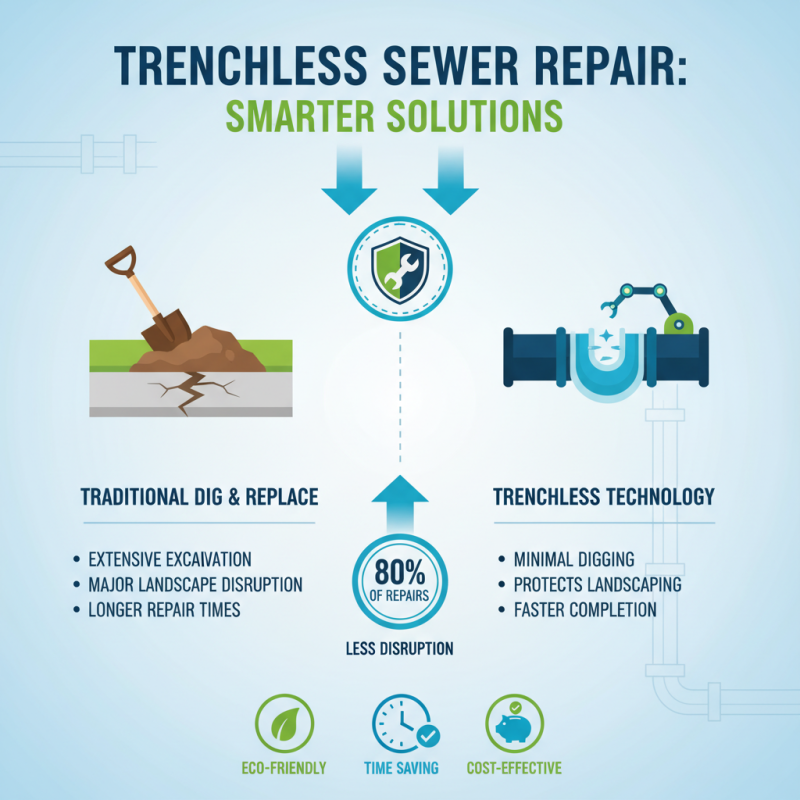
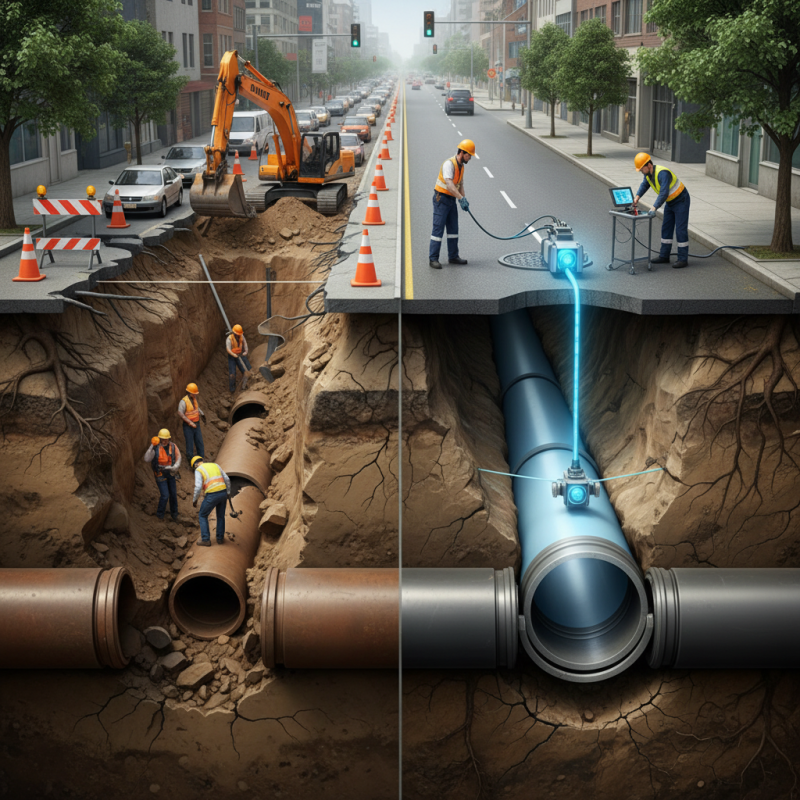
Trenchless sewer repair methods are gaining popularity due to their numerous advantages. These methods allow for the repair of pipelines with minimal disruption to the surface above. According to the National Association of Sewer Service Companies, about 80% of sewer repairs can utilize trenchless technology. This reduces the need for extensive excavation.
One major benefit is cost-effectiveness. Traditional methods often require heavy machinery and labor-intensive processes, which can raise costs significantly. Trenchless repair typically costs 30% to 50% less than conventional methods. Additionally, the time required for repairs is also significantly reduced. Many trenchless repairs can be completed within a day, compared to weeks for traditional methods.
Moreover, trenchless methods have a lower environmental impact. Less digging means reduced damage to landscaping, driveways, and roads. However, it's crucial to recognize that not all sewer problems can be solved this way. In some cases, extensive damage could still require traditional excavation. Therefore, a thorough inspection is essential before choosing a method.
Common Techniques for No-Dig Sewer Repairs
No-dig sewer repair techniques have become increasingly popular. Traditional methods, like excavation, can cause significant disruption and high costs. Industry reports indicate that up to 90% of sewer repairs can now be done without digging. This saves time, money, and minimizes environmental impact.
One common method is trenchless technology. This includes pipe bursting and cured-in-place pipe (CIPP) lining. Pipe bursting involves breaking apart the old sewer line and replacing it with a new one simultaneously. Meanwhile, CIPP lining creates a new pipe within the old one. This method is less intrusive and can often be completed in a day. Reports show that trenchless repairs can reduce project time by 50%.
Though these methods are effective, they aren't flawless. Sometimes, tree roots or severe blockages can prevent proper installation. Homeowners still face issues with access and ongoing maintenance. Many professionals recommend regular inspections to identify potential problems early. While the techniques are advanced, they require skilled operators for the best results.
Essential Tools and Equipment for Sewer Repair
When addressing sewer issues, it’s essential to have the right tools and equipment. This approach helps you avoid extensive digging, saving time and costs. Industry reports suggest that non-invasive repair methods can reduce project time by up to 50%.
Key tools include a sewer camera. This device inspects pipes from the inside. It identifies blockages and damages accurately. A high-pressure water jetter is crucial for clearing tough clogs. It uses high-pressure water to remove stubborn debris. Another essential tool is a trenchless pipe lining system. It rehabilitates existing pipes without replacing them entirely.
Tips: Always wear safety gear when handling sewer equipment. It protects you from potential hazards. Regularly inspect your tools for wear and tear. This practice ensures everything works efficiently.
Having these tools on hand can make repairs smoother. However, sometimes issues arise that aren't easily resolved. They require professional assessment. Remember, not all repair situations are straightforward. Being prepared is vital, but adaptability is equally important.
Steps to Evaluate the Condition of Sewer Lines
Evaluating the condition of sewer lines is crucial for effective repairs. To ensure durability, regular inspections are needed. A study indicated that 70% of sewer issues arise from aging infrastructure. Many pipes are over 50 years old, requiring careful assessment to avoid costly failures.
Using advanced technology, like CCTV inspections, can reveal hidden problems. These tools allow professionals to see the inside of pipes. Staying informed about the condition helps prioritize repairs. In fact, it's reported that proactive maintenance can reduce repair costs by up to 30%. Yet, not all municipalities invest in this technology, leading to increased risks.
Homeowners should also perform basic checks. Look for signs like slow drains or unpleasant odors. Regularly cleaning out gutters can prevent blockages. These steps may seem small, but they can save significant headaches later. Remember, maintaining sewer lines is not just about fixes; it’s about creating a resilient system. Investing in evaluations today can protect against emergencies tomorrow.
Cost Comparison: Traditional vs. Trenchless Repairs
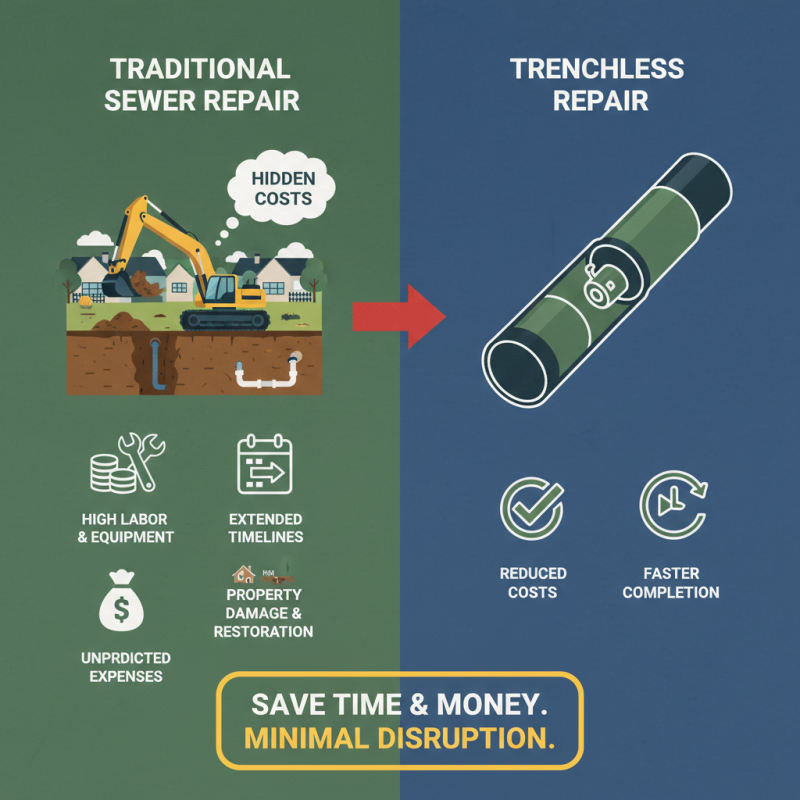
When it comes to sewer repairs, cost is often a major concern. Traditional methods usually involve significant excavation. This can lead to higher labor costs and extended project timelines. You might pay a lot for machinery and restoration after digging. Property damage can add to these costs as well. Sometimes, the true cost isn’t apparent at first.
Trenchless repairs offer a different approach. This method minimizes digging, reducing the risk of damaging landscaping or driveways. Many homeowners find it more affordable in the long run. The speed of repairs is impressive, too. But it’s not without potential downsides. Depending on the issue, trenchless methods may not be suitable for every situation.
There’s also the question of technology. Some older homes may have outdated or complex plumbing systems. These might complicate trenchless options. If you’re considering this method, ensure you consult with professionals. They can provide a clear picture of what to expect. A balance between costs and effectiveness is key in making your decision.