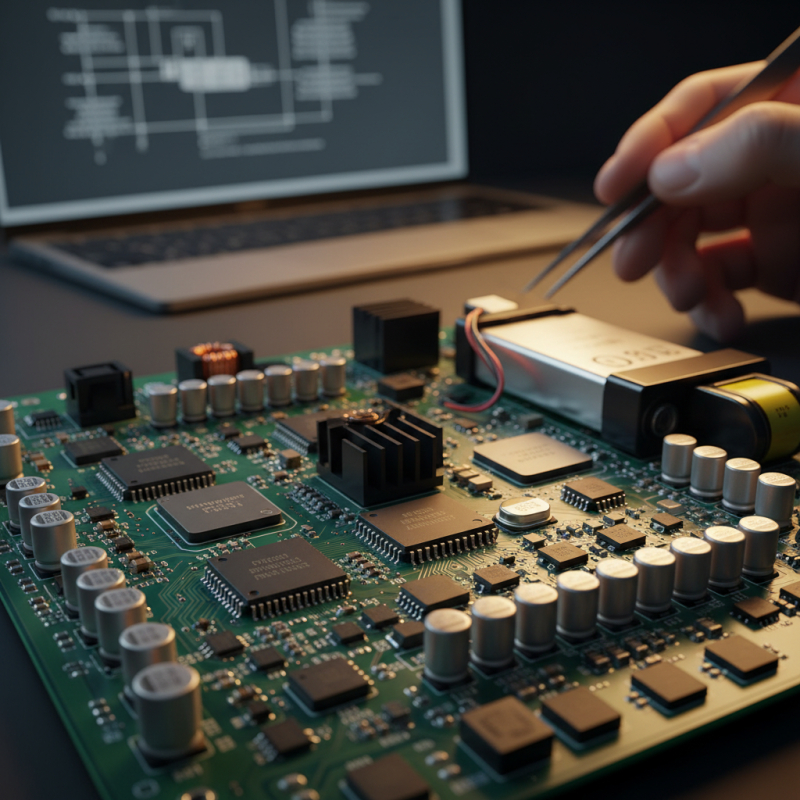
How to Choose the Best Power Management ICs for Your Needs?
Choosing the right Power Management ICs is vital for optimizing electronic device performance. These components manage power distribution, enhance efficiency, and extend battery life. However, the wide variety of options can be overwhelming.
Understanding your specific needs is essential. For instance, consider voltage levels, current ratings, and thermal performance. Examine the application's unique requirements carefully. Cost is another factor; sometimes lower prices come with trade-offs.
Selecting the best Power Management ICs involves both research and experience. Many overlook integrating power management into their designs. This often leads to inefficiencies that could have been avoided. Relying on expert insights and product specifications can help make informed choices.
Understanding Power Management ICs: An Overview of Types and Functions
Power Management Integrated Circuits (PMICs) are essential for electronic devices. They manage power flow efficiently, enhancing performance and reliability. There are different types of PMICs tailored for specific functions. Buck converters step down voltage, while boost converters increase it. It's crucial to understand these functions for optimal device integration.
Battery management is another vital function of PMICs. These circuits monitor battery health and control charging cycles. They help extend battery life, a key concern for mobile devices. Yet, not all PMICs are equal. Some may lack advanced features or reliability. It's important to evaluate your project's specific needs carefully.
Evaluate factors like efficiency, thermal performance, and cost. A PMIC with high efficiency may reduce overheating risks. However, a lower-cost option might lack robustness. Striking a balance often involves trade-offs. It is worth investing time in research. Understanding various types equips you with the knowledge to make informed choices.
Key Specifications to Consider When Selecting Power Management ICs
When selecting power management ICs, several key specifications are crucial. Voltage regulation is one of the most important factors. You need to ensure that the IC can manage the required input and output voltages for your application. Check the voltage range. An IC with a wider voltage range can suit more designs, but it may also complicate your design.
Efficiency ratings are essential too. Look for power conversion efficiency. High efficiency is crucial to minimize heat. A cooler system often translates to longer operational life. However, achieving high efficiency at all loads can be a challenge. Some ICs perform well under specific conditions, so understanding your load profile is important.
Another aspect to consider is thermal management. Many power management ICs generate heat during operation. Make sure you assess the thermal performance of the IC. Additional components like heat sinks might be necessary for high-power applications. Yet, they add complexity and cost. It’s a balance between thermal performance and system design. You may find that an IC with slightly lower specs allows for easier integration. Always weigh the pros and cons of different options against your specific design requirements.
Evaluating Efficiency: Importance of Thermal Performance in ICs
When selecting power management ICs, thermal performance is crucial. Efficient thermal management can lead to enhanced reliability and lifespan. An IC that runs hot can lead to failure and reduced performance. Assessing thermal performance helps predict how heat will impact your design.
Tips: Always check the thermal resistance rating in the datasheet. Lower resistance typically indicates better heat dissipation. A proper thermal design can prevent overheating issues.
Consider the application environment. Some applications may expose ICs to higher temperatures. Evaluate how these conditions will affect efficiency. A robust design takes into account all factors that influence heat generation. Remember, not all ICs handle heat the same.
Tip: Conduct real-world tests. Prototype testing can reveal unexpected thermal challenges. This step may highlight areas for improvement in your design. Aim for a balance between performance and thermal efficiency.
How to Choose the Best Power Management ICs for Your Needs?
| IC Model | Efficiency (%) | Thermal Performance (°C/W) | Input Voltage Range (V) | Output Current (A) |
| PMIC-01 | 95 | 30 | 3 - 5.5 | 2 |
| PMIC-02 | 90 | 35 | 4.5 - 12 | 3 |
| PMIC-03 | 92 | 28 | 1.8 - 6 | 1.5 |
| PMIC-04 | 94 | 32 | 2.5 - 10 | 2.5 |
| PMIC-05 | 89 | 40 | 3 - 15 | 4 |
Cost Analysis: Budgeting for Power Management ICs in Design Projects
When budgeting for power management ICs, it’s crucial to assess various cost factors. Pricing varies significantly based on design requirements and functionalities. Basic components might be more affordable, while those with complex features will increase your expenses. Researching multiple suppliers is a wise approach. Comparing costs ensures you don't overspend. Keep in mind that lower prices often come at the expense of quality.
Consider the long-term implications of your choices. Choosing cheaper alternatives can lead to design issues. Think about potential failure rates and warranty costs. Investing in a more reliable power management IC can save expenses in future projects. Also, assess additional costs like integration and testing.
It's essential to involve your team in the budgeting process. Diverse perspectives can highlight hidden expenses. Regular reviews of your budget can pinpoint areas needing improvement. Flexibility in your financial plans allows for necessary adjustments. This strategy not only leads to better decisions but also enhances project outcomes.
Cost Analysis of Power Management ICs in Design Projects
Exploring Future Trends: Innovations in Power Management Technologies
The power management landscape is evolving rapidly. New technologies focus on efficiency and compact designs. Miniaturization allows integration into smaller devices. This trend supports the growing demand for portable electronics.
Emerging innovations include advanced energy harvesting methods. These technologies capture energy from environmental sources. For example, solar power can charge small gadgets. Energy-efficient ICs reduce waste and enhance battery life.
Tips for selecting power management ICs: Consider your device’s power requirements. Assess thermal performance to prevent overheating. Evaluate integration capabilities to simplify the design. Remember, not every solution fits all applications. Experimentation may lead to better results. Each choice can have long-term effects on system reliability and performance.