China Best Sewer Repair Solutions for Global Buyers?
For global buyers, choosing a sewer rehabilitation supplier is not just a price comparison. The right method depends on pipe material, diameter, damage, access, groundwater, and the surrounding soil. A cracked clay line beneath a narrow street may need a different repair than a corroded concrete main under a busy road. CCTV inspection, documented measurements, and a clear condition report help buyers compare proposals on evidence rather than promises.
Trenchless-technology educator Dr. Tom Iseley has contributed extensively to the field. A practical summary of the engineering principle associated with his work—not a verbatim quotation—is: “Match the repair method to the pipe and site, not to the sales pitch.” That distinction matters when evaluating cured-in-place pipe lining, pipe bursting, or localized repairs. Each can be suitable in the right conditions; none is a universal fix. Buyers seeking a repair sewer solution should ask for method limits, installation records, material specifications, and inspection criteria before agreeing to a project.
Supplier capability matters as much as equipment. Check relevant project experience, quality-control procedures, crew training, and the availability of technical support after installation. Confirm how the supplier handles site surveys, unexpected pipe conditions, and warranty claims. For cross-border procurement, clarify shipping dimensions, spare parts, training, and communication responsibilities. Details get missed. I have seen proposals look complete while leaving basic questions unanswered. That is worth questioning. A dependable comparison should explain both what the system can do and what it cannot.
Sewer Defect Assessment: Flow, CCTV Inspection, and 50–100-Year Pipe Life
For global buyers evaluating sewer repair options in China, diagnosis should come before method selection.
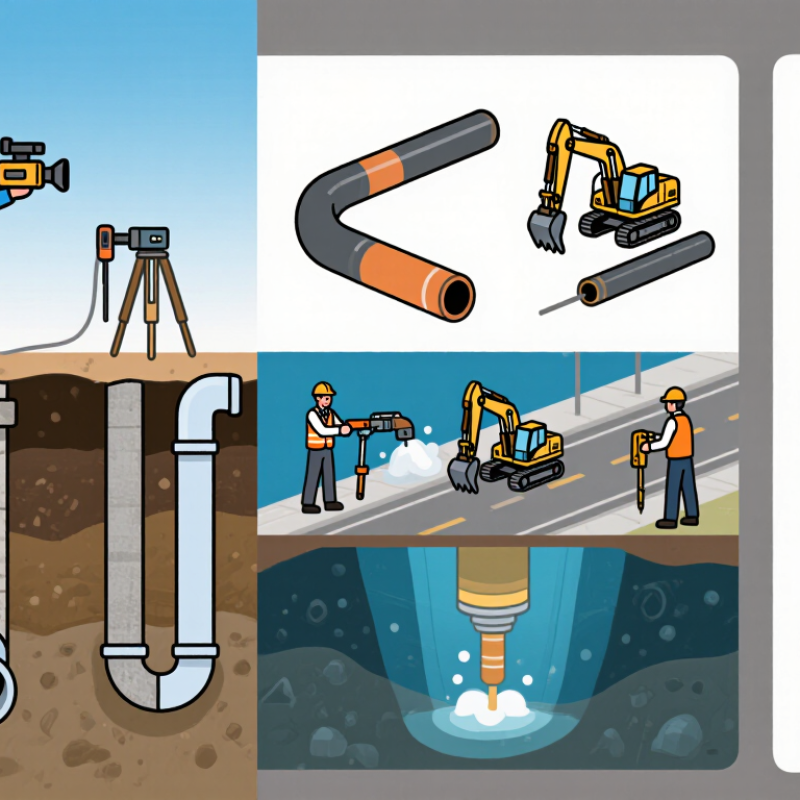
Start with flow observations: compare dry-weather and wet-weather patterns, note slow drainage, surcharge, and unexpected inflow. These clues help crews distinguish possible blockages from infiltration or capacity problems. They are not a diagnosis by themselves. A cleaned pipe then allows CCTV inspection to reveal cracks, displaced joints, corrosion, root intrusion, and deformation. Consistent defect coding makes bids easier to compare across contractors and projects.
Many sewer pipes are discussed as having a 50–100-year service-life range, but this is not a guarantee. Material, installation, soil movement, wastewater chemistry, and maintenance all matter. CCTV also has limits: standing water, debris, and poor camera positioning can hide defects. Reinspect when evidence is unclear. The US EPA’s 2022 Clean Watersheds Needs Survey estimated $630.1 billion in wastewater infrastructure needs over 20 years, underscoring the scale of renewal work. Buyers should request inspection footage, defect records, flow findings, and a repair rationale—not just a lifespan claim. A practical specification links each proposed repair to observed conditions and explains what remains uncertain.
China’s Main Solutions: CIPP, Pipe Bursting, Sliplining, and Spot Repairs
For global buyers comparing sewer repair solutions from China, the right method depends on pipe condition, access, and required flow capacity. CIPP installs a resin-saturated liner inside the existing pipe, then cures it in place. It can reduce excavation on streets where digging would disrupt traffic or buildings. However, bends, service connections, and water infiltration need careful assessment before installation. Details matter.
Pipe bursting replaces a damaged pipe by breaking it outward while pulling a new pipe through. It may suit severely deteriorated lines, but nearby utilities and soil conditions can limit its use. Buyers should check proposed pull lengths, access pits, and the replacement pipe’s dimensions. A low quoted price does not prove the site is suitable.
Sliplining inserts a smaller pipe into the old one, creating a straightforward barrier against leaks. The trade-off is reduced internal diameter, which may affect capacity. Spot repairs target a short damaged section, often avoiding work on an otherwise sound line. They are less suitable when defects are widespread.
Request inspection records, material specifications, and installation quality checks from suppliers. I would not rely on a method name alone; the condition survey and repair scope should match.
CIPP Standards: ISO 11296-4, 50-Year Design Life, and Resin Testing
For global sewer buyers, CIPP selection should begin with evidence, not attractive specifications. ISO 11296-4 provides a structured framework for non-pressure sewer rehabilitation using cured-in-place pipes. It addresses design, installation, curing, inspection, and performance verification. Buyers should request project records, not only laboratory brochures.
A 50-year design life is a design objective, not an automatic promise. Wall thickness must match pipe diameter, groundwater pressure, soil conditions, ovality, and expected loads. Site cleaning also matters. Grease, roots, and standing water can reduce bonding quality. After curing, crews should check thickness, wrinkles, resin distribution, and visible defects. CCTV footage should show the finished liner clearly.
Resin testing deserves close attention. Useful records include viscosity, gel time, curing temperature, flexural strength, flexural modulus, tensile properties, water absorption, and chemical resistance. Samples should represent the actual resin batch and curing method. Testing only a convenient laboratory sample can create false confidence. I have seen specifications look complete while missing temperature records. That gap matters. It may affect cure quality and long-term performance.
Field conditions remain unpredictable. Cold groundwater can slow curing. Excessive resin may create waste or uneven saturation. Insufficient resin can leave dry areas. Buyers should compare test methods, acceptance limits, and inspection responsibilities before signing. Clear documentation supports reliable decisions across different climates, contractors, and regulatory environments.
Trenchless Cost Metrics: Up to 70–90% Less Surface Excavation
For global buyers, trenchless sewer repair can reduce surface excavation by 70–90% compared with traditional open-cut work. The saving is visible on roads, pavements, gardens, and busy commercial sites. Smaller access pits usually mean less traffic disruption, fewer reinstatement materials, and shorter restoration schedules. However, this percentage is a project estimate, not a guarantee. Pipe depth, soil movement, groundwater, access limits, and damage severity can change the result.
Reliable decisions begin with a CCTV inspection, flow assessment, and structural review. Engineers should check whether lining, pipe bursting, or localized repair suits the existing network. Trenchless methods still require entry points. They also need skilled installation and careful curing control. A low excavation figure may hide higher preparation costs. That deserves honest review.
Tips: Request a site-specific excavation comparison, not a general sales estimate. Ask for installation tolerances, inspection records, expected service life, and a clear repair warranty. Confirm local permits and restoration standards before ordering. Keep an allowance for unknown pipe conditions. Real projects are rarely perfect. A cautious buyer may save more by rejecting an unsuitable method than by choosing the lowest initial quotation.
Global Supplier Checks: ISO 9001, EN 13566, Capacity, and Warranty Terms
China Best Sewer Repair Solutions for Global Buyers?
Global buyers should verify more than a factory certificate. The ISO Survey 2022 recorded over 1.26 million ISO 9001 certificates worldwide. Yet ISO 9001 confirms a management system, not automatic sewer performance. Ask for the current certificate, covered site, audit scope, and corrective-action records. For trenchless products, EN 13566 is more specific. Check the relevant part, resin or liner type, test method, and declared design life. A copied certificate is a warning sign.
Capacity needs physical evidence. Request monthly output in meters, production-line photographs, curing equipment details, and recent delivery records. Compare stated capacity with lead times during peak demand. The WHO/UNICEF JMP 2023 update reported that 3.5 billion people lacked safely managed sanitation in 2022. That pressure can encourage rushed procurement, especially for urgent municipal projects. In practice, small suppliers may offer better attention, but their backup capacity can be weak. This is easy to overlook.
Tips: Put warranty terms in a signed schedule. Define coverage years, leakage limits, installation responsibility, inspection procedures, response time, spare materials, and claim evidence. Ask whether the warranty covers labor or only materials. Confirm transport damage rules and remedy options. A ten-year warranty sounds strong. Its exclusions may say otherwise. Independent factory audits and third-party test reports add useful confidence, although they still cannot replace site trials.