
Submit Inquiry
27 West Beaver Creek Road Unit #2
Richmond Hill, ON, CANADA L4B 1M8

International:

1-905-886-0335

US & Canada:

1-800-265-5696

China Best Rod Breakdown Machine Supplier?

Finding the China Best Rod Breakdown Machine Supplier requires more than comparing prices or polished factory photos. It requires practical evidence from copper and aluminum wire production. A dependable supplier should explain drawing speed, rod diameter ranges, die-box design, cooling methods, electrical controls, and finished-wire accuracy. These details directly affect surface quality, energy use, and maintenance intervals.

Wire-processing consultant David R. Hughes states, “A rod breakdown machine earns trust through stable output, not impressive specifications.” His point matters on the factory floor. A machine may advertise high speed, yet vibration can create uneven wire surfaces and frequent die replacement. Ask suppliers for test-run videos, sample data, component brands, and measured production results. Better still, request a trial using your own rod material.

Experienced manufacturers in China can offer customized layouts, automated tension control, and responsive technical support. However, “customized” does not always mean better. Extra functions may increase adjustment difficulty and spare-parts costs. That deserves careful reflection.

A credible Rod Breakdown Machine supplier should provide installation guidance, operator training, preventive-maintenance schedules, and clear warranty terms. Check whether engineers understand your target conductor size, alloy, output volume, and plant conditions. Look for documented inspection records, not only promises. Small details matter: clean cable routing, accessible lubrication points, guarded rotating parts, and stable temperature control.

The best choice is rarely the cheapest quotation. It is the supplier that combines repeatable performance, transparent communication, and practical after-sales service. Even a strong supplier can make mistakes. That is why factory audits, reference checks, and acceptance testing remain essential before purchase.
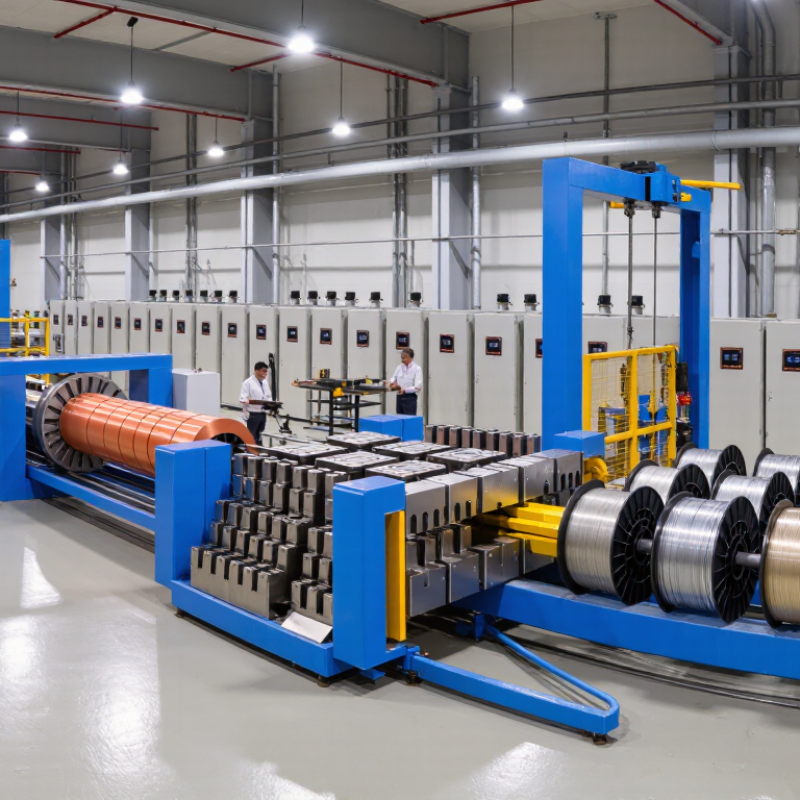
China Best Rod Breakdown Machine Supplier?

What Is a Rod Breakdown Machine?

A rod breakdown machine is industrial equipment that reduces the diameter of metal rod through repeated drawing. It prepares copper, aluminum, or other suitable wire materials for later production stages. The rod enters through a pay-off system and passes through hardened dies. Each die applies controlled pressure and reduces the cross-section gradually. Several drawing blocks work in sequence. The finished wire leaves thinner, longer, and more uniform. Small details matter. Lubrication limits friction and helps prevent surface scratches. Cooling systems remove heat created during high-speed drawing. Without stable tension, the rod may twist, break, or develop uneven dimensions.

When evaluating a rod breakdown machine supplier in China, request clear technical specifications and tested production data. Ask about maximum inlet diameter, outlet range, drawing speed, motor control, die compatibility, and cooling capacity. A reliable supplier should explain maintenance intervals and provide practical installation guidance. Check how the machine handles emergency stops, tension changes, and routine die replacement. These details reveal more than polished photographs. In plant trials, operators often notice vibration before instruments show a serious problem. That observation deserves attention. No machine performs perfectly under every material condition. Rod hardness, lubricant quality, and ambient temperature can change results. A thoughtful supplier discusses these limitations instead of promising effortless operation. Good engineering includes honest adjustment.

How Does a Rod Breakdown Machine Work?

A rod breakdown machine converts thick copper or aluminum rod into a smaller, uniform wire. The process begins when a payoff system feeds the rod into the first drawing die. The die is a hardened opening with a carefully controlled diameter. Pulling force reduces the rod while increasing its length.

Several drawing passes may be used. Each pass removes a limited amount of material. This prevents excessive stress, surface cracks, and uneven dimensions. Rotating capstans pull the rod through the dies at controlled speeds. Lubrication reduces friction and carries away heat. Cooling systems protect both the wire and the tooling. Small sensors monitor tension, temperature, speed, and wire diameter during operation.

The machine needs balance. Too much pressure can damage the rod. Too little tension may cause unstable feeding or surface marks. In my experience, die alignment often deserves more attention than operators expect. A machine can appear powerful but still produce inconsistent wire. That is a real weakness. Reliable suppliers should explain drawing capacity, motor control, cooling design, maintenance access, and testing procedures clearly. They should also provide practical training and measurable performance data. Operators must inspect dies regularly and adjust lubrication when material or production speed changes. No setup is perfect. Careful observation remains essential.

Key Specifications and Performance Factors

China Best Rod Breakdown Machine Supplier?

Choosing a rod breakdown machine supplier requires more than comparing motor power. Start with the working range: inlet rod diameter, finished wire size, maximum reduction, and compatible copper or aluminum grades. A practical machine should maintain stable tension during heavy reduction. Its line speed must match the required output without causing surface scratches or uneven elongation. Ask for measured production data, not only catalog values.

Pay close attention to the capstan diameter, die arrangement, cooling method, and take-up capacity. A water-cooling system should control temperature near the die and capstan, especially during long shifts. Servo tension control can reduce wire breaks, but only when sensors are calibrated correctly.

A clean control cabinet matters. Dust and heat can shorten component life. Small details matter.

A reliable supplier should provide factory testing, installation guidance, spare-part information, and operator training. Request samples from similar rod sizes and inspect the finished wire under magnification. Check noise, vibration, energy use, and emergency-stop response. The stated output may look impressive. Real performance can change with material quality, die wear, and operator habits. I would also review maintenance records from existing users, although these records are not always complete. That gap deserves attention before signing a purchase agreement.

How to Choose the Best Rod Breakdown Machine Supplier

China Best Rod Breakdown Machine Supplier?

Choosing the best rod breakdown machine supplier requires more than comparing prices. A reliable supplier should understand your rod material, target diameter, production speed, and finished wire requirements. Ask for a complete technical proposal, not a general catalogue. It should specify capstan dimensions, die layout, motor capacity, cooling method, control system, and take-up design. Request test results from similar copper or aluminum applications. Real data matters.

Inspect the supplier’s manufacturing process when possible. Review machining accuracy, electrical component records, assembly procedures, and quality checks. A clean workshop helps, but documentation proves more. Ask how the supplier handles installation, operator training, spare parts, and remote troubleshooting. Response time can protect production when a bearing or sensor fails. It is also useful to contact current users and ask about downtime, energy use, and maintenance costs.

A polished video is not proof. Demand a factory acceptance test with agreed measurements. Confirm surface quality, wire tension, temperature stability, and noise levels. One overlooked detail can create months of frustration. No supplier is perfect, and even a strong proposal may miss your actual working conditions. Leave room for technical review and practical corrections. The best choice is usually the supplier that communicates clearly, documents limits honestly, and supports the machine after delivery.

China Best Rod Breakdown Machine Supplier? - How to Choose the Best Rod Breakdown Machine Supplier
Evaluation Dimension What to Verify with the Supplier Practical Reference Benchmark Why It Matters
Machine Application Confirm whether the machine is designed for copper rod, aluminium rod, or both, and whether it is suitable for the required downstream wire-drawing process. Application Match
Choose a configuration specifically rated for the material and finished wire size required by the production line.
A machine designed for the wrong material can cause unstable drawing, excessive die wear, surface defects, and lower productivity.
Inlet and Outlet Diameter Request the guaranteed inlet rod diameter range, finished wire diameter range, number of dies, and reduction schedule. Configuration-Based
Common rod breakdown configurations process approximately 8 mm rod and reduce it to fine-wire sizes, but the exact outlet range depends on the die arrangement and material.
The diameter range determines whether the equipment can meet current products and future production requirements.
Production Capacity Ask for guaranteed output in tonnes per hour or kilograms per hour at a defined inlet size, outlet size, material, and operating speed. Use Guaranteed Data
Compare suppliers using the same test conditions rather than comparing maximum line speed alone.
Actual throughput is affected by material, reduction ratio, wire size, die condition, cooling, and line availability.
Main Motor and Drive System Check motor power, drive type, speed-control method, overload protection, energy-saving functions, and availability of replacement drive components. Industrial Standard
A variable-frequency or equivalent controlled drive should provide stable speed regulation and controlled acceleration.
Stable torque and speed control help reduce wire breaks, surface damage, and unnecessary energy consumption.
Die and Capstan Arrangement Review the number of drawing blocks, die-box design, capstan material, die cooling method, and accessibility for die replacement. Maintenance-Friendly
Die boxes should allow accurate alignment, effective cooling, and quick replacement without complicated disassembly.
Correct alignment and cooling directly influence dimensional accuracy, die life, and finished-wire quality.
Cooling and Lubrication Confirm the cooling medium, circulation method, filtration arrangement, temperature monitoring, and lubricant compatibility with the processed metal. Closed-Loop Preferred
A circulating cooling and lubrication system with filtration and temperature control is preferred for continuous operation.
Effective cooling and lubrication reduce friction, overheating, oxidation, die wear, and wire surface defects.
Finished-Wire Quality Request measurable tolerances for wire diameter, ovality, surface condition, straightness, and electrical conductivity where applicable. Acceptance Criteria
Quality requirements should be defined in writing according to the applicable product standard and customer specification.
Written quality limits make supplier comparisons objective and provide clear factory-acceptance criteria.
Automation and Safety Check the control system, touchscreen functions, emergency stops, guarding, overload alarms, wire-break detection, and restart procedures. Safety First
The machine should include accessible emergency-stop devices, physical guarding, interlocks where required, and documented operating procedures.
Proper safety functions protect operators and reduce downtime caused by uncontrolled faults or incorrect restart operations.
Electrical Compatibility Verify rated voltage, frequency, phase configuration, control-panel requirements, cable specifications, and compatibility with the installation site. Confirm Before Order
Three-phase industrial supplies such as 380–415 V and 50 Hz are common in many regions, but the final configuration must match the destination site.
Incorrect electrical specifications can delay commissioning and may damage control or drive components.
Factory Testing Ask whether the supplier provides a factory acceptance test using the customer's rod material, dies, target diameter, and production conditions. FAT Recommended
Test records should include operating speed, output, wire dimensions, alarms, safety functions, and visible surface quality.
A documented test reduces the risk of receiving equipment that performs differently from the quotation or technical agreement.
Installation and Commissioning Clarify the scope of installation supervision, operator training, alignment support, commissioning duration, and required site utilities. Written Scope
Responsibilities for foundation, lifting, electrical connection, cooling water, lubrication, and trial materials should be clearly assigned.
Clear responsibilities prevent installation delays and unexpected expenses after delivery.
Spare Parts Availability Request a recommended two-year spare-parts list covering dies, bearings, seals, belts, sensors, electrical components, and lubrication parts. Lifecycle Support
Critical consumables and wear parts should have defined part numbers, material specifications, and realistic delivery times.
Reliable spare-parts access protects production continuity and reduces emergency maintenance costs.
Warranty and Service Response Review warranty duration, covered components, exclusions, remote troubleshooting, response time, and the process for handling replacement parts. Compare Contract Terms
A 12-month warranty from commissioning or shipment is a common commercial reference, but the signed contract should define the actual coverage.
A low purchase price may become expensive if technical support and warranty responsibilities are unclear.
Documentation and Training Confirm delivery of manuals, electrical drawings, lubrication charts, parts lists, fault codes, maintenance schedules, and training materials in English. Complete Documentation
Documentation should correspond to the supplied machine configuration and include recommended maintenance intervals.
Accurate documents help operators maintain performance and allow technicians to troubleshoot efficiently.
Compliance and Export Readiness Check applicable machinery-safety, electrical, electromagnetic-compatibility, export-packing, and destination-country requirements. Destination Specific
Required conformity documents depend on the importing country and the final machine configuration.
Meeting destination requirements helps avoid customs issues, installation restrictions, and compliance-related delays.
Total Cost of Ownership Compare machine price, dies, tooling, freight, installation, energy use, lubricant consumption, spare parts, maintenance, and expected downtime. Look Beyond Price
Evaluate the estimated cost per tonne or per kilometre of finished wire over the planned operating period.
The lowest quotation is not necessarily the most economical option over the machine's service life.
Supplier Evaluation Method Use a written scoring sheet covering technical fit, test results, service capability, documentation, delivery terms, warranty, and total cost. Weighted Comparison
Give the highest weight to guaranteed production performance, finished-wire quality, reliability, and after-sales support.
A structured comparison reduces the influence of unclear claims and makes the final supplier decision easier to justify.

Reference values are general industry benchmarks. Final specifications, performance guarantees, compliance documents, and commercial terms should be confirmed in the supplier's signed technical proposal and acceptance agreement.

Quality, Service, and After-Sales Support Criteria

China Best Rod Breakdown Machine Supplier? Quality, Service, and After-Sales Support Criteria

A reliable rod breakdown machine supplier must prove quality beyond polished brochures. Ask for factory acceptance test records, wire-size tolerances, energy consumption, and continuous running data. Check capstan balance, die cooling, tension control, and emergency-stop response. During a plant visit, inspect cable routing, lubrication points, and spare-part labeling. These small details reveal manufacturing discipline.

Service quality becomes visible after installation. Request commissioning by trained engineers and practical operator training. McKinsey reports that predictive maintenance can reduce machine downtime by 30–50% and maintenance costs by 20–30%. Therefore, suppliers should provide vibration checks, temperature monitoring, remote diagnostics, and clear maintenance schedules. A useful service agreement states response times, replacement-part availability, and escalation procedures. Vague promises are not enough. I have seen technically strong machines lose production because one sensor waited weeks for replacement.

Tips: Compare three references using similar copper rod sizes. Ask for twelve-month uptime records. Confirm warranty exclusions in writing. Test remote support before signing. Also, calculate total ownership cost, not only the purchase price. Include dies, cooling water, electricity, training, and planned downtime. Deloitte’s 2023 Smart Manufacturing survey found that manufacturers continue investing in connected production systems, yet implementation gaps remain. That warning matters. A supplier may offer advanced software, but operators still need simple screens and clear alarms. Reliability is often less impressive than marketing, but more valuable.

How to Evaluate a China Rod Breakdown Machine Supplier

This buyer-defined scorecard prioritizes machine quality, service capability, after-sales support, and compliance when comparing suppliers. Quality receives the highest weighting because stable wire performance, machine durability, and consistent output directly affect production efficiency. The percentages are evaluation weights, not company or market-share data.

123