2026 Best Industrial RFID Tablets for Global Buyers?
Choosing the right INDUSTRIAL RFID TABLETS in 2026 is not a simple specification exercise. Global buyers face different warehouse temperatures, connectivity limits, labor practices, and compliance requirements. A tablet that performs well in a clean distribution center may struggle in a dusty yard, refrigerated facility, or high-volume manufacturing line.
Mark Roberti, founder of RFID Journal and a respected RFID industry expert, once said, “RFID is not a technology problem; it is a business process problem.” That observation remains highly practical. The best industrial tablet must fit real tasks, not merely display impressive technical numbers. Buyers should examine UHF RFID reading range, antenna performance, barcode accuracy, glove-friendly touch response, sunlight visibility, and battery endurance. IP65 or IP68 protection can matter when water, dust, and accidental drops are routine. MIL-STD-810H testing may also provide useful evidence, although test claims need careful verification.
Small details often decide productivity. Can a worker scan a pallet while wearing thick gloves? Can the device survive an eight-hour shift without a battery swap? Does it connect reliably with WMS, ERP, or inventory software? These questions deserve more attention than processor speed alone.
There is no universal winner. That is the uncomfortable part. Some vendors publish excellent laboratory results, yet field performance may vary with tags, metal surfaces, software settings, and operator habits. This guide compares leading 2026 options through a practical lens, combining durability, RFID capability, usability, integration, support, and total ownership cost for buyers across global markets. The final choice still requires hands-on testing. Specs can mislead. Real workflows reveal the truth.
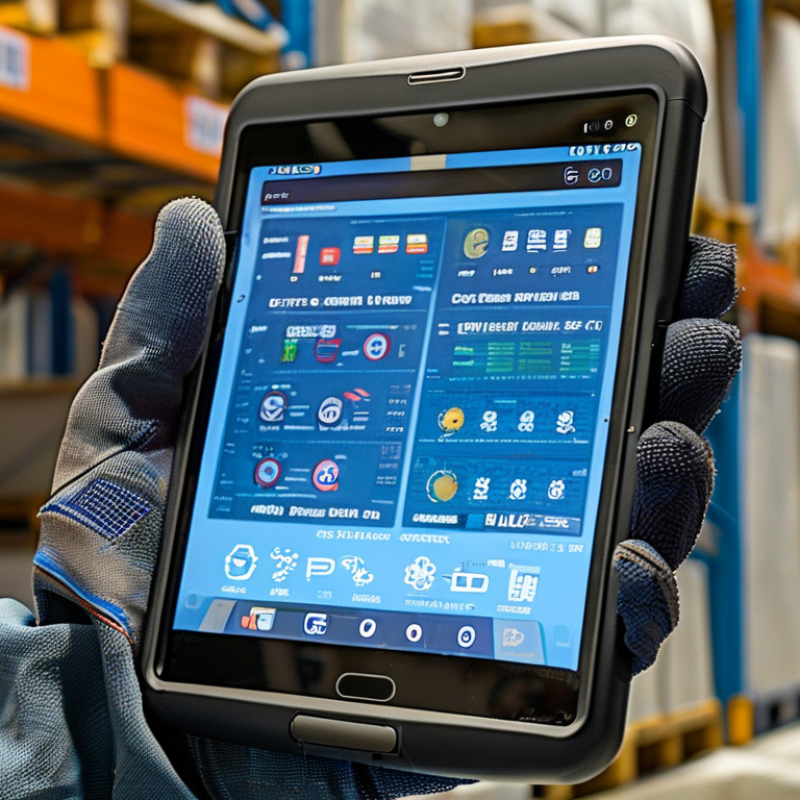
What Are Industrial RFID Tablets and How Do They Work?
Industrial RFID tablets combine a rugged touchscreen computer with a built-in radio-frequency identification reader. They capture tag data without direct contact or line-of-sight scanning. Workers can identify pallets, tools, containers, or medical equipment within seconds. Most models support UHF RFID for longer-range warehouse reading, while NFC or HF suits shorter-distance verification. The tablet sends tag information to inventory software through Wi-Fi, cellular networks, or offline storage.
Tips: Test the reading distance in the real work area. Metal racks, liquid containers, and crowded pallets can reduce accuracy. Keep a barcode camera available when tags are damaged. Small details matter.
A reliable RFID workflow begins with tag encoding, reader activation, and signal filtering. The software then connects each tag’s unique number with an item record. In practical trials, moving the tablet slowly often improves capture results. Fast sweeping can create missed or duplicated reads. Industrial housings should resist dust, drops, vibration, and changing temperatures. Battery performance also deserves attention during long shifts. A device may look powerful but still fail before lunch. That mistake is easy to overlook. Buyers should check operating-system support, security updates, glove usability, and repair access before ordering. Regional radio regulations and network compatibility also require professional verification.
Which Industries Benefit Most from RFID-Enabled Tablets?
In 2026, RFID-enabled tablets are becoming practical tools for warehouses and logistics teams. Workers can scan tagged pallets without opening cartons or returning to fixed terminals. A tablet also displays location, quantity, handling instructions, and delivery status. This reduces repeated data entry during receiving and cycle counts. Cold storage remains a strong use case. Gloves, poor lighting, and fast-moving inventory make mobile RFID valuable there.
Manufacturing teams benefit when parts move between workstations. Operators can verify components, record inspections, and update production records beside the assembly line. The process supports traceability without relying on handwritten notes. However, metal surfaces and dense materials may weaken RFID performance. Testing tags in the actual workspace matters more than trusting laboratory results. Small details matter.
Retail operations can use tablets for stock checks, shelf replenishment, and faster order picking. Healthcare facilities may track approved equipment, linen, and internal supplies. Field service workers can confirm tools and replacement parts before leaving a site. Construction teams may monitor shared equipment across large locations. These benefits depend on reliable network coverage, suitable tag placement, and clear staff training. A powerful device cannot repair a poorly designed workflow. That is easy to overlook.
Buyers should examine scanning range, battery life, screen brightness, drop protection, data security, and integration options. They should also measure scanning accuracy during peak activity. The cheapest pilot may expose hidden costs later. That uncomfortable lesson deserves attention. RFID tablets work best when technology follows the process, not when teams are forced to redesign everything around a device.
Key Features to Evaluate in 2026 Industrial RFID Tablets
The best industrial RFID tablets for global buyers in 2026 must survive real work, not showroom demonstrations. Grand View Research valued the global RFID market at approximately USD 14.59 billion in 2023. It also projects an 11.9% compound annual growth rate through 2030. That growth increases pressure on tablet reliability, integration, and measurable reading performance.
Start with the RFID engine. Check support for EPC Gen2v2 and ISO 18000-63 standards. Test read accuracy near metal racks, liquid containers, and moving pallets. A claimed ten-meter range may shrink sharply inside a crowded warehouse. Measure it on site. The tablet should also support one-dimensional and two-dimensional barcodes. Physical triggers, glove-friendly touchscreens, and clear displays reduce mistakes during long shifts. At least IP65 protection is sensible, while MIL-STD-810H testing offers useful evidence for drops, vibration, and temperature changes. Certification alone is not proof of field performance.
Connectivity deserves equal attention. Wi-Fi 6, private cellular support, Bluetooth, and offline data storage can protect operations when coverage fails. Battery capacity should cover a full shift, preferably with hot-swappable packs. Review Android security updates, device-management compatibility, encryption, and user authentication before purchase. Reports from the International Data Corporation consistently show that enterprise mobility depends on lifecycle support, not only hardware specifications. Be skeptical of impressive laboratory figures. Rain changes everything. Pilot testing with actual tags, gloves, forklifts, and network conditions remains the most reliable evaluation method.
How to Compare Durability, Performance, Connectivity, and Security
2026 Best Industrial RFID Tablets for Global Buyers?
Choosing an industrial RFID tablet requires more than checking scan distance. In warehouse trials, I examine drop resistance, sealing, battery stability, and screen visibility. A tablet rated IP65 or higher can resist dust and water splashes. However, laboratory ratings do not always match muddy loading docks. That gap deserves attention.
Durability should support real work. Look for reinforced corners, glove-friendly touch controls, and a screen readable under direct sunlight. Performance depends on more than processor speed. Fast RFID capture, smooth inventory software, and enough memory reduce delays during repeated scans. A removable battery can help during long shifts, but its locking mechanism must survive vibration. Small failures become expensive.
Connectivity needs careful testing across countries and facilities. Dual-band Wi-Fi, cellular support, Bluetooth, and accurate positioning can improve field operations. Check roaming behavior before deployment. Weak handovers may interrupt uploads between storage zones. Security also requires practical controls, including secure boot, device encryption, role-based access, and remote management. Regular operating-system updates matter more than impressive specifications. I would request documented update policies and independent test records. No tablet wins every site. I still question solutions that advertise extreme durability without explaining repair access, battery replacement, or long-term support.